Listen to this Article
A child may understand words but still feel lost in a social situation. A birthday party, school assembly, doctor visit, haircut, playground rule, or sudden classroom change can feel confusing, loud, unpredictable, or stressful.
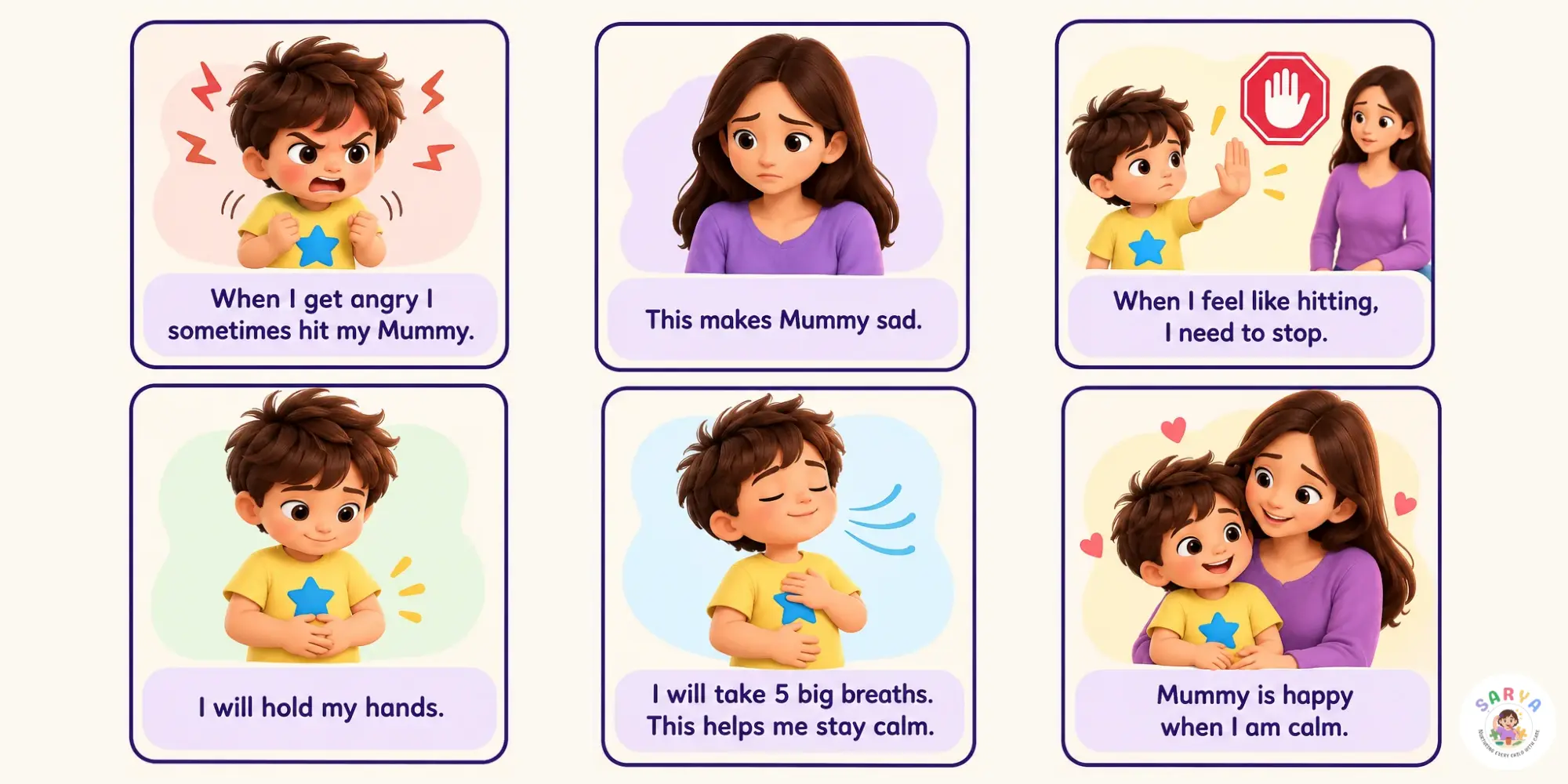
A social story helps prepare a child before the situation happens. It explains what may happen, why it happens, how others may feel, and what the child can do.
Social stories are often used for autistic children, but they may also help children with ADHD, anxiety, speech-language delays, developmental differences, or difficulty understanding social expectations. CDC’s latest autism data reports that about 1 in 31 children aged 8 years has been identified with autism spectrum disorder, which makes practical support tools important for both families and schools.
What Is a Social Story?
A social story is a short, personalized story that explains a social situation, routine, expectation, or concept in a clear and respectful way. It helps a child understand what may happen and what they can try.
The official Social Stories criteria from Carol Gray describe a Social Story as a structured story that accurately describes a relevant context, skill, achievement, or concept according to specific criteria.
Social Story Meaning in Simple Words
In simple parent language, a social story prepares a child for a situation before they are expected to manage it.
For example, a social story can explain:
- What happens when I go to the dentist
- How I can wait for my turn
- What I can do when my classroom is noisy
- Why my teacher may change the timetable
- How I can ask for help
- What happens when I lose a game
The goal is not to control the child. The goal is to reduce confusion and help the child feel more prepared.
Social Stories and Social Narratives
“Social Stories” is a formal approach developed by Carol Gray. “Social narratives” is a broader term used in autism education for short stories that explain social situations, cues, and possible responses.
Vanderbilt IRIS describes social narratives as an evidence-based practice that explains social situations in detail, highlights relevant cues, and offers examples of appropriate responding for students with ASD.
Who Can Benefit From Social Stories?
Social stories are most commonly used with autistic children, but they can also support children who need extra help understanding situations, transitions, social rules, or emotional responses.
They work best when the story is specific to the child, written respectfully, and used before the situation, not only during distress.
Social Stories for Autistic Children
Autistic children may find some social situations difficult because expectations are often hidden. A child may not automatically know why people line up, wait, share, whisper, greet guests, or sit quietly during an assembly.
WHO notes that autistic people may have differences in social interaction and communication, difficulty moving from one activity to another, and unusual responses to sensations.
Social stories can help with:
- New places
- Changes in routine
- Sensory-heavy situations
- Waiting
- Sharing
- Asking for help
- Doctor or therapy visits
- School events
- Birthday parties
- Community outings
Social Stories for Teachers and Classrooms
Teachers can use social stories to make classroom expectations clearer and kinder.
Useful school topics include:
- Lining up after recess
- Sitting during circle time
- Asking before taking materials
- Using a quiet voice
- Fire drills
- Substitute teachers
- Group work
- Playground rules
- Losing a game
- Going on a school trip
A classroom social story should not shame a child. It should explain the situation and give the child a realistic, safe option.
When Should Parents or Teachers Use a Social Story?
Use a social story when a child needs more preparation, context, or emotional safety before a situation. It is especially helpful when adults keep saying “I already explained this,” but the child still feels confused or upset.
The best time to use a social story is before the situation happens, when the child is calm.
Everyday Situations
Parents can use social stories for daily life moments that often create stress.
Examples:
- Going to school
- Brushing teeth
- Visiting a doctor
- Getting a haircut
- Meeting guests
- Going to a restaurant
- Riding in a car or bus
- Going to a birthday party
- Sleeping in a new place
If the situation happens often, the story can be read regularly until the child becomes more comfortable.
School and Social Situations
Teachers can use social stories for situations where expectations may not be obvious to the child.
Examples:
- Waiting for a turn
- Joining a game
- Asking to play
- Sharing toys
- Raising a hand
- Walking in a line
- Handling mistakes
- Asking for a break
- Moving between classrooms
A social story helps the child understand the “why,” not just the rule.
Emotional and Sensory Situations
Some children need stories for emotional or sensory preparation.
Examples:
- “Sometimes the room gets loud”
- “I can wear headphones”
- “If I feel worried, I can ask for help”
- “A fire drill is loud, but it helps us practice safety”
- “Sometimes plans change”
This is important because behaviour is often communication. A child who refuses, cries, runs, or shuts down may be overwhelmed, not naughty.
Social Story vs Visual Schedule: What Is the Difference?
A social story and a visual schedule are both visual supports, but they are not the same. Parents and teachers often use them together.
A social story explains meaning. A visual schedule shows sequence.
A Social Story Explains Meaning
A social story explains what may happen, why it may happen, who may be there, how the child may feel, and what the child can try.
Example: “When I go to the doctor, the doctor may check my ears. This helps the doctor know if my body is healthy. I can sit with my parent. I can ask for a break.”
A Visual Schedule Shows Sequence
A visual schedule shows the order of activities.
Example: car, waiting room, doctor, sticker, home.
For routine support, parents can read Sarya’s Visual Schedule for Autism and use Sarya’s autism app to build predictable routines with visual cards and voice prompts. Sarya’s autism app includes 500+ culturally authentic visual cards, voice guidance, star rewards, and predictable daily routines.
Many Children Need Both
For a doctor visit, a social story can explain what happens and why. A visual schedule can show the steps.
Together, they can reduce uncertainty:
- Social story: “What this means”
- Visual schedule: “What happens next”
- Sarya routine: “Practice the steps at home”
How to Write a Social Story That Actually Helps
A helpful social story is specific, respectful, and realistic. It should not sound like a lecture or a rule list.
The best social stories are written from the child’s real experience.
Start With One Situation
Do not write a story called “How to behave at school.” That is too broad.
Choose one situation:
- I can wait in line
- I can ask for help
- I can go to the dentist
- I can handle a change in plan
- I can use a quiet voice in the library
One story should solve one clear confusion.
Use the Child’s Perspective
Write in a way the child can understand.
Example:
“Sometimes my classroom gets noisy. Noise can feel uncomfortable. I can cover my ears, use my headphones, or ask my teacher for a break.”
This is better than: “I must not cry when the classroom is noisy.”
Keep the Language Accurate and Calm
Use honest and flexible words like “sometimes,” “usually,” “may,” and “I can try.” Avoid promises you cannot control.
Good wording:
- “Sometimes plans change.”
- “Usually, my teacher will tell me what comes next.”
- “I can try to wait.”
- “If I need help, I can ask.”
Avoid:
- “I will never feel scared.”
- “I must always be quiet.”
- “Good children do not cry.”
- “If I shout, everyone will be upset with me.”
Social stories should support understanding, not create shame.
Add Pictures or Real Photos
Many children understand better when the story includes pictures.
Use:
- Real photos of the school gate
- The actual classroom
- The child’s dentist clinic
- The bus stop
- The therapy room
- The child’s own headphones or calm corner
For routine carryover, Sarya Features supports visual routines, parent voice prompts, progress tracking, rewards, and culturally familiar daily-life routines.
Simple Social Story Template
A template keeps the story clear and prevents it from becoming too long. Use short sentences and real-life details.
You can use this structure:
- 1Where: Where does this happen?
- 2Who: Who will be there?
- 3What: What may happen?
- 4Why: Why does it happen?
- 5How I may feel: What feelings may come up?
- 6What I can do: What safe option can I try?
- 7What happens next: How does the situation end?
Example topic: going to a new classroom.
Short sample:
“Today I may go to a new classroom. My teacher will be there. Some things may look different. I may feel unsure. I can look at my visual schedule. I can ask my teacher for help. After class, I will go back to my usual routine.”
Social Story Examples for Parents and Teachers
Examples help parents and teachers understand how specific a social story should be. Keep the story short, calm, and matched to the child’s situation.
Example 1: Going to School
This story can help with morning separation or school gate anxiety.
“Every morning, I go to school. My parent takes me to the gate. My teacher helps me enter the classroom. I may feel like staying with my parent. My parent will come back after school. I can wave goodbye. I can look at my visual schedule to see what happens first.”
Example 2: Waiting My Turn
This story can help during games, classroom activities, therapy, or playground time.
“Sometimes I wait for my turn. Waiting means someone else is using the toy or doing the activity. I may feel excited or impatient. I can hold my waiting card. I can count, look at a book, or ask, ‘When is my turn?’ My turn will come.”
Example 3: Visiting the Doctor
This story can help before check-ups, injections, or new clinic visits.
“I am going to the doctor. The doctor helps check if my body is healthy. The doctor may look in my ears, listen to my chest, or ask me to open my mouth. I can sit with my parent. If I feel worried, I can ask for a break. After the visit, I will go home.”
Example 4: A Change in Routine
This story can help when recess is cancelled, guests arrive, or a substitute teacher comes.
“Sometimes plans change. A change means something different will happen today. I may feel upset because I expected the old plan. An adult will tell me the new plan. I can look at my new schedule. I can take a deep breath or ask for help.”
Common Mistakes to Avoid
A social story should make life clearer for the child. If it is too long, too controlling, or too abstract, it may not help.
Avoid these common mistakes:
- Making the story too long
- Writing it like a list of rules
- Using shame, fear, or threats
- Promising something that may not happen
- Reading it only during a meltdown
- Using pictures the child does not understand
- Ignoring sensory needs
- Expecting one story to fix a complex behaviour
- Writing from the adult’s frustration, not the child’s perspective
- Forgetting to involve parents, teachers, or therapists
If a story is not helping, revise it. The child may need a shorter story, clearer pictures, sensory support, a visual schedule, or professional guidance.
What Research Says About Social Stories and Social Narratives
Social stories and social narratives are used in autism education to support understanding of social situations, routines, and expectations. They are not a cure or medical treatment.
Vanderbilt IRIS lists social narratives as an evidence-based practice for students with ASD. It also notes that if an evidence-based practice is implemented with fidelity and data show no change, teams should consider whether the practice matches the student and whether additional supports are needed.
Social Stories Are Support Tools, Not Medical Treatment
A social story does not diagnose autism, treat autism, or replace therapy. It is a support tool that may help a child understand and prepare for specific situations.
Use social stories as part of a broader support plan that may include:
- Visual schedules
- Speech therapy
- Parent training
- Occupational therapy
- Behaviour support
- Classroom accommodations
- Sensory strategies
- Community practice
WHO states that evidence-based psychosocial interventions can improve communication and social skills and that autistic people should receive support based on individual and evolving needs. (who.int)
When to Seek Professional Support
Parents and teachers should seek professional guidance when a child’s distress, communication difficulties, sensory needs, or behaviour challenges affect daily life, learning, safety, or social participation.
A social story may help with preparation, but deeper support may be needed when challenges are persistent.
Consider professional support if the child:
- Has frequent meltdowns around transitions
- Struggles with communication or speech delay
- Cannot understand everyday social expectations
- Has severe anxiety around school or outings
- Avoids many social situations
- Has sensory distress in daily environments
- Shows aggression, self-injury, or unsafe behaviour
- Needs help with daily living and independence skills
Families can explore Aaryavart’s Autism Therapy, Speech Therapy, ABA Therapy, Community Integration, and Life Skills Training. Aaryavart’s autism therapy page describes support for communication, behaviour, sensory needs, learning readiness, social skills, and daily living development.
Aaryavart’s community integration program focuses on social skills, comfort in real-world settings, peer interaction, and supported community outings for children and young people with autism and other developmental disabilities.
How Sarya Can Support Social Stories at Home
Sarya is not a replacement for therapy or formal Social Stories training. Its strength is helping children practice visual routines and transitions in daily life.
A parent or teacher may use a social story to explain a situation, then use Sarya to help the child follow the steps.
For example:
- Social story: “Going to the dentist”
- Sarya routine: car, waiting room, doctor, home
- Social story: “I can ask for a break”
- Sarya routine: work, break, return, finished
- Social story: “Going to school”
- Sarya routine: brush teeth, wear uniform, pack bag, school
How Sarya Helps With Carryover
Sarya can help parents and teachers support the routine side of social preparation.
Families can use Sarya for:
- School morning routines
- Doctor visits
- Therapy visits
- Bedtime routines
- Getting ready for outings
- Classroom-style routines at home
- ADL skills like brushing, dressing, bathing, and packing a bag
- Transitions for autistic and ADHD children
Sarya’s autism app supports visual schedules, culturally relevant cards, voice-guided routines, and star rewards. For children who need support with focus and task completion, Sarya’s ADHD app breaks multi-step tasks into clear visual cards with voice prompts and timers. (thesarya.com)
Final Takeaway
A social story helps a child understand a situation before they face it. It can explain what may happen, why it happens, how the child may feel, and what they can try.
For autistic and neurodivergent children, this kind of preparation can make social situations, transitions, school routines, and community outings feel more predictable.
Use social stories for meaning. Use visual schedules for sequence. Use Sarya to practice routines visually at home. And when social communication, sensory distress, behaviour, or speech concerns are persistent, seek professional support through qualified therapy services such as Aaryavart.
Social Story FAQs
What is a social story in autism?
A social story is a short, personalized story that explains a situation, routine, social expectation, or concept in a clear way. It helps an autistic child understand what may happen and what they can do.
Who created Social Stories?
Social Stories were created by Carol Gray. The formal Social Stories approach follows specific criteria for writing accurate, respectful, and helpful stories.
Are social stories evidence-based?
Social narratives are listed by Vanderbilt IRIS as an evidence-based practice for students with ASD. They should be individualized, implemented consistently, and monitored for effectiveness.
What is the difference between a social story and a visual schedule?
A social story explains meaning, feelings, expectations, and possible responses. A visual schedule shows the order of activities or steps.
How do I write a social story for my child?
Choose one specific situation, write from the child’s perspective, use calm and accurate language, include what may happen, explain why, and give the child a safe action they can try.
What should a social story include?
A social story should include where the situation happens, who is involved, what may happen, why it happens, how the child may feel, what the child can do, and what happens next.
Can social stories help with behaviour?
They may help when behaviour is linked to confusion, anxiety, transitions, sensory discomfort, or unclear expectations. They should not be used as punishment or as a replacement for therapy.
Can teachers use social stories in classrooms?
Yes. Teachers can use social stories for lining up, group work, sharing, fire drills, assemblies, substitute teachers, playground rules, and classroom transitions.
When should I read a social story to a child?
Read it when the child is calm, before the situation happens. For recurring situations, read it regularly until the child becomes more familiar with the routine.
Can social stories help with transitions?
Yes. Social stories can help explain why a transition happens and what the child can do. A visual schedule can then show the actual order of steps.
Are social stories only for autistic children?
No. They are commonly used with autistic children, but they may also help children with ADHD, anxiety, developmental delays, communication difficulties, or social understanding challenges.
Should a social story include pictures?
Pictures or real photos can make a social story easier to understand, especially for visual learners. Use images the child recognizes.
Can Sarya be used for social stories?
Sarya should not replace a formal Social Stories program or therapy. It can support related visual routines, transitions, and daily practice after a social story has explained the situation.
When should parents seek autism therapy or speech therapy?
Seek professional support if your child has persistent social communication difficulties, speech delay, sensory distress, severe transition challenges, frequent meltdowns, or behaviour that affects safety, learning, or daily life.
Archana Pandey
Sarya Team Member