Listen to this Article
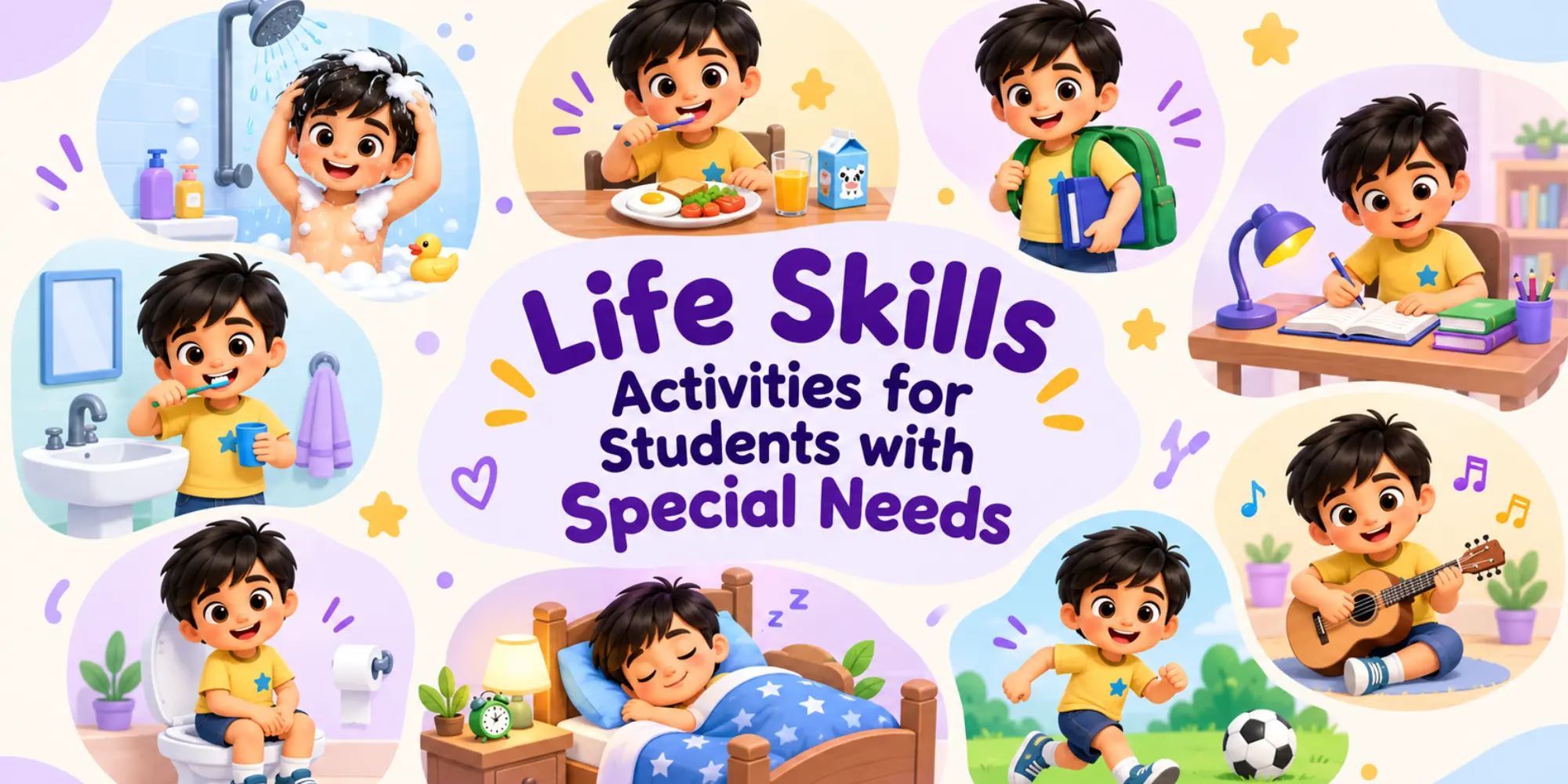
ADL skills are the everyday life skills children use to care for themselves. Brushing teeth, washing hands, getting dressed, eating, toileting, bathing, packing a school bag, and cleaning up toys may look simple to adults, but for a child, these routines involve attention, memory, motor skills, language, sensory comfort, and practice.
For many children, daily living skills develop gradually through imitation and routine. For autistic children, children with ADHD, developmental delays, Down syndrome, speech delays, or sensory processing differences, ADL skills may need to be taught more directly, one small step at a time.
The need for practical independence support is growing. CDC’s latest ADDM data reports that about **1 in 31 children** aged 8 years has been identified with autism spectrum disorder, based on 2022 tracking data from 16 U.S. communities.
Sarya helps families turn ADL skills into visual, step-by-step routines, so children can see what to do next instead of relying only on repeated verbal instructions.
What Are ADL Skills?
ADL skills, or Activities of Daily Living, are the basic daily tasks a child needs to care for their body and participate in home, school, and community routines. In simple words, ADL skills are the self-care skills behind independence.
The American Academy of Pediatrics describes activities of daily living as daily tasks such as feeding, eating, dressing, and toileting. It also distinguishes them from more complex instrumental activities of daily living, such as cooking, shopping, or using a telephone.
Common ADL skills for children include:
- Brushing teeth
- Washing hands
- Bathing
- Getting dressed
- Using the toilet
- Eating with utensils
- Drinking from a cup
- Combing hair
- Wiping face and nose
- Packing a bag
- Cleaning up after play
- Following a bedtime routine
These are not just “small tasks.” They are the foundation for confidence, school readiness, hygiene, safety, and future independence.
ADL Skills vs Daily Living Skills vs Life Skills
Parents often hear these terms used together, so it helps to understand the difference. They overlap, but they are not always used in the same way.
ADL skills usually mean basic self-care tasks: eating, dressing, toileting, grooming, and hygiene.
Daily living skills can include ADL skills plus practical home routines, such as cleaning up toys, packing a school bag, helping at mealtime, or following a morning routine.
Life skills is a wider term. It may include communication, safety, money, social skills, cooking, transport, and community participation.
For this blog, ADL skills means the daily self-care and functional routines children need to become more independent.
The Daily Living Skills Every Child Needs
Every child develops at a different pace, but most children need support across a few core daily living skill areas. The goal is not perfection. The goal is participation.
Here are the main ADL skill categories parents should know:
| ADL Category | Examples For Children |
|---|---|
| Hygiene | Brushing teeth, washing hands, bathing, wiping face |
| Dressing | Wearing clothes, socks, shoes, buttons, zippers |
| Toileting | Recognizing urge, using toilet, wiping, flushing, washing hands |
| Feeding | Using spoon, fork, cup, sitting for meals, trying foods |
| Grooming | Combing hair, nail care with support, applying lotion |
| Sleep routine | Changing clothes, brushing teeth, calming down, getting into bed |
| Safety | Asking for help, avoiding hot objects, staying near adult outdoors |
| Household participation | Tidying toys, putting clothes in basket, clearing plate |
These daily living skills are easier to teach when they are broken into predictable steps. That is why many parents use a visual routine app, picture cards, or a visual schedule for ADL skills.
Basic ADLs And Instrumental ADLs
Some skills are basic self-care skills. Others are more advanced independence skills that children learn later.
Basic ADLs include eating, dressing, bathing, toileting, and personal hygiene.
Instrumental ADLs are more complex daily living skills, such as preparing a simple snack, organizing school materials, using money, following a medicine routine with adult supervision, or learning how to ask for help.
Children’s National Hospital explains that daily living skills can include personal hygiene, cooking, money management, healthcare tasks, and other practical routines. For autistic children, it recommends clear steps, visual schedules, modeling, prompting, daily practice, and sensory adjustments.
Why ADL Skills Are Important For Children
ADL skills matter because they affect daily comfort, dignity, health, school participation, and family routines. When a child can do even one step independently, the whole day can feel lighter.
For example, a child who learns to wash hands before meals may participate more smoothly in school lunch. A child who learns to put shoes near the door may leave home with less stress. A child who learns to brush teeth with visual steps may need fewer verbal reminders.
ADL skills can help children:
- Build independence
- Improve hygiene and safety
- Participate in school routines
- Reduce daily frustration
- Communicate needs more clearly
- Feel proud of their abilities
- Prepare for future self-care
HealthyChildren.org, from the American Academy of Pediatrics, notes that children with autism and other developmental disabilities may have challenges with fine motor skills, sensory processing, motor planning, and daily living tasks such as brushing teeth, using a spoon, and dressing.
ADL Skills Build Confidence, Not Just Compliance
Teaching ADL skills is not about forcing independence before a child is ready. It is about giving the child the right amount of help, then slowly reducing that help as the child becomes more confident.
A child may first learn to complete only the last step of a routine. For brushing teeth, that might mean putting the toothbrush back. For dressing, it may mean pulling up pants after a parent starts them. Small wins matter.
The best approach is supportive, calm, and consistent:
- Help the child understand the routine
- Let the child do the part they can do
- Praise effort, not speed
- Repeat the routine at the same time daily
- Add independence gradually
ADL Skills Support School Readiness
School readiness is not only about letters and numbers. Children also need daily living skills that help them participate in class, lunch, toileting, transitions, and play.
Before and during school years, children often need help with:
- Opening lunch boxes
- Washing hands
- Using the toilet
- Wearing shoes
- Carrying a bag
- Following classroom routines
- Cleaning up after activities
- Asking for help
For children who benefit from visuals, Sarya’s visual schedule for autism can support routine learning at home and school.
ADL Skill Milestones By Age: What Parents Should Know
Milestones are helpful guides, not strict deadlines. A child may do some daily living skills early and others later. What matters is whether the child is making progress and whether delays are affecting daily life.
CDC explains that developmental milestones are things most children, 75% or more, can do by a certain age. CDC also advises parents to speak with a doctor if a child is not meeting milestones or has lost skills.
Ages 2 To 3: Early Participation
At this stage, children are usually learning to participate in self-care, not complete everything independently.
By around 3 years, CDC lists using a fork and putting on some clothes by themselves, such as loose pants or a jacket, as developmental milestones.
Helpful ADL goals at this age may include:
- Using a spoon or fork with some spilling
- Helping wash hands
- Putting toys in a basket
- Pulling pants up or down with help
- Trying to put on loose clothes
- Helping wipe face
- Following a simple cleanup routine
Ages 4 To 5: More Independent Practice
At this age, many children begin doing more of the routine themselves, though they may still need reminders, setup, or supervision.
CDC lists serving food or pouring water with adult supervision and unbuttoning some buttons among 4-year milestones.
Helpful ADL goals at this age may include:
- Dressing with fewer prompts
- Washing hands with visual reminders
- Brushing teeth with adult help
- Using the toilet routine more independently
- Pouring water with supervision
- Clearing a plate
- Helping pack a school bag
Ages 5 And Above: Quality, Safety, And Consistency
Older children often need support with doing routines more completely, safely, and consistently. At this stage, the goal may shift from “Can my child do the step?” to “Can my child remember the step every day?”
ADL goals may include:
- Brushing teeth properly
- Bathing with supervision
- Choosing weather-appropriate clothes
- Packing school items
- Managing morning routines
- Following a bedtime routine
- Helping with simple chores
Why Some Children Struggle With ADL Skills
If a child struggles with brushing, dressing, toileting, or feeding, it does not always mean the child is refusing. Sometimes the routine is too hard, too fast, too sensory-heavy, or too unclear.
Common reasons children may struggle with ADL skills include:
- Fine motor delay
- Sensory sensitivity
- Motor planning difficulty
- Attention challenges
- Difficulty following spoken instructions
- Speech or language delay
- Anxiety around new routines
- Low tolerance for frustration
- Difficulty shifting from one task to another
- Autism, ADHD, developmental delay, or other neurodevelopmental needs
For example, a child who avoids brushing teeth may dislike the taste of toothpaste, the feeling of bristles, or the sound of water. A child who avoids dressing may struggle with tags, tight clothing, buttons, or sequencing.
ADL Skills In Autism, ADHD, And Neurodivergent Children
Neurodivergent children often learn ADL skills best when adults make the routine clear, visual, predictable, and sensory-aware.
For autistic children, visual schedules and small steps can be especially helpful. Children’s National recommends breaking daily living tasks into small, clear steps, using visual schedules, modeling, prompting, daily routine practice, sensory adjustments, and practicing skills in different settings.
For children with ADHD, routines may need to be short, visible, and rewarding. A child may know how to brush teeth but forget the sequence, get distracted, or leave the routine halfway.
This is where a visual routine helps. The child does not have to hold every step in memory. They can look, follow, finish, and move to the next step.
How To Teach ADL Skills At Home, Step By Step
Teaching daily living skills works best when parents choose one routine and make it easier to follow. Trying to teach brushing, dressing, toileting, bathing, and mealtime all at once can overwhelm both the child and the parent.
Start with the routine that creates the most stress, or the one your child is closest to learning.
A simple method:
- 1Pick one ADL skill.
- 2Break it into small steps.
- 3Show the steps visually.
- 4Model the routine.
- 5Help only as much as needed.
- 6Let your child finish one step independently.
- 7Practice at the same time daily.
- 8Celebrate effort.
- 9Slowly reduce prompts.
- 10Track progress.
This is called step-by-step teaching or task analysis. It turns a big skill into smaller actions the child can actually practice.
Example: Brushing Teeth Routine
Brushing teeth is a common ADL skill that many children find hard because it includes taste, texture, sound, motor planning, and sequencing.
A brushing routine can be broken into:
- 1Go to sink
- 2Pick toothbrush
- 3Add toothpaste
- 4Wet brush
- 5Brush front teeth
- 6Brush back teeth
- 7Brush tongue
- 8Spit
- 9Rinse
- 10Put toothbrush back
In Sarya’s ADL skills app, parents can build this as a visual routine with cards, custom photos, voice prompts, and star rewards. Sarya’s ADL page explains that it supports hygiene, bathing, dressing, mealtime, chores, 500+ visual cards, custom voice recordings, and progress tracking.
Example: Getting Dressed Routine
Getting dressed can be difficult because it requires body awareness, balance, hand strength, sequencing, and clothing tolerance.
A dressing routine can be broken into:
- 1Choose clothes
- 2Wear underwear
- 3Wear shirt
- 4Wear pants
- 5Wear socks
- 6Wear shoes
- 7Check mirror
- 8Put night clothes in basket
If a child struggles, start with one part. For example, the child may only pull the shirt down after the parent helps put it over the head.
Example: Mealtime Routine
Mealtime ADL skills include more than eating. They include washing hands, sitting, using utensils, chewing safely, drinking, and cleaning up.
A simple mealtime routine can be:
- 1Wash hands
- 2Sit at table
- 3Use spoon or fork
- 4Take small bites
- 5Drink water
- 6Wipe mouth
- 7Clear plate
- 8Wash hands again
For children with sensory sensitivities, introduce changes slowly. New textures, smells, and sounds can be difficult, so pressure usually makes mealtime harder.
Visual Routines Make ADL Skills Easier To Learn
Many children do better when they can see the routine. Spoken instructions disappear quickly. Visual steps stay in front of the child.
A visual routine can help when a child:
- Forgets the next step
- Needs repeated reminders
- Gets distracted easily
- Struggles with transitions
- Resists non-preferred tasks
- Has speech or receptive language delays
- Needs more independence but less adult talking
Sarya is built as a visual routine app for autistic, ADHD, and neurodiverse children. It lets families choose from 500+ visual cards, add custom photos, record familiar voice prompts, use star rewards, and track progress.
For children who need focus and sequencing support, Sarya also has a dedicated ADHD app. For autistic children who benefit from visual structure, families can explore Sarya’s autism app.
Printable Cards vs ADL Skills App
Printable cards and apps can both help. The best choice depends on your child and your routine.
Printable cards may work well when:
- The routine rarely changes
- Your child likes touching and moving cards
- You want a simple wall chart
- You need a no-device option
An ADL skills app may work better when:
- Your child needs voice prompts
- You want to update routines quickly
- You want to use custom photos
- You need progress tracking
- Multiple caregivers follow the same routine
- You want the same routine at home, school, and therapy
For many families, the best starting point is one visual routine, such as brushing teeth, getting dressed, or packing a school bag.
When Should Parents Seek Professional Support?
A blog can guide you, but it cannot diagnose your child. If daily living skills are causing ongoing stress or delays, it is wise to speak with a qualified professional.
Consider professional support if your child:
- Avoids many self-care routines
- Has strong sensory distress during dressing, bathing, brushing, or feeding
- Cannot follow simple routine steps even with practice
- Loses skills they previously had
- Has persistent toileting, feeding, dressing, or hygiene challenges
- Struggles with communication, attention, or behaviour during daily routines
- Needs support beyond what home practice can provide
A pediatrician, occupational therapist, speech-language pathologist, psychologist, developmental pediatrician, or behaviour therapist may help identify what support your child needs.
For therapy-led support, families can explore Aaryavart’s Autism Therapy, Autism Treatment, Occupational Therapy, Speech Therapy, and ABA Therapy services. Aaryavart describes autism therapy support across assessment, ABA-based intervention, speech therapy, occupational therapy, sensory therapy, parent training, early intervention, and daily living development.
Aaryavart’s occupational therapy page specifically mentions support for self-care and daily living skills, including dressing, feeding, grooming, toileting routines, fine motor skills, sensory regulation, and parent guidance.
How Sarya Helps Children Practice ADL Skills Daily
ADL skills improve through repetition, but repetition becomes easier when the routine is simple, visual, and encouraging. Sarya helps parents convert daily self-care tasks into step-by-step visual routines children can follow.
Families can use Sarya for:
- Brushing teeth
- Bathing
- Getting dressed
- Washing hands
- Eating meals
- Packing a school bag
- Bedtime routines
- Morning routines
- Cleaning up toys
- Simple chores
Sarya is designed for children with autism, ADHD, Down syndrome, and other neurodiverse needs, but it can support any child who benefits from visual routine practice. It is especially useful when a child understands better through pictures, familiar voices, and predictable steps.
Start small. Choose one ADL skill your child needs every day. Build it visually in Sarya. Practice it at the same time daily. Then add the next routine when your child is ready.
Final Takeaway
ADL skills are the daily living skills behind independence. Brushing, dressing, toileting, eating, bathing, and cleaning up are not just routine tasks. They are the building blocks of confidence, health, school readiness, and participation in family life.
If your child struggles with daily living skills, begin with one routine. Break it into small steps. Use visuals. Practice calmly. Celebrate progress. Seek professional support when challenges are persistent or affecting daily life.
Sarya can help you turn everyday ADL skills into simple visual routines your child can understand, follow, and practice with more confidence.
ADL Skills FAQs
What are ADL skills in children?
ADL skills are activities of daily living. For children, they include everyday self-care tasks such as eating, dressing, toileting, bathing, brushing teeth, washing hands, grooming, and following basic routines.
What are examples of ADL skills?
Examples of ADL skills include brushing teeth, wearing clothes, using the toilet, washing hands, eating with a spoon, drinking from a cup, bathing, combing hair, packing a school bag, and cleaning up toys.
What is the difference between ADL skills and life skills?
ADL skills are basic self-care skills. Life skills are broader and may include communication, safety, cooking, money skills, social skills, transport, and community participation.
At what age should children learn ADL skills?
Children begin learning ADL skills in toddlerhood and continue improving through childhood. Milestones vary, but CDC lists skills such as using a fork and putting on some clothes by age 3, and pouring water with supervision and unbuttoning some buttons by age 4.
How do I teach my child daily living skills at home?
Pick one routine, break it into small steps, show the steps visually, model the task, help only as much as needed, practice daily, and slowly reduce support as your child becomes more confident.
Why does my child struggle with brushing, dressing, or toileting?
Children may struggle because of sensory sensitivity, fine motor delay, motor planning difficulty, attention challenges, anxiety, communication delay, or developmental differences. If the difficulty is persistent, consult a qualified professional.
Are ADL skills harder for autistic children?
Some autistic children may need more direct teaching, visual supports, repetition, and sensory adjustments for ADL skills. Children’s National recommends breaking tasks into small steps and using visual schedules for daily living skills in autistic children.
Can ADHD affect daily living skills?
Yes. A child with ADHD may know the task but struggle with attention, sequencing, remembering steps, or finishing the routine. Visual routines and short step-by-step prompts can help.
Can visual schedules help with ADL skills?
Yes. Visual schedules can make daily living skills easier by showing the child what to do first, next, and last. They are especially helpful for routines like brushing teeth, getting dressed, washing hands, mealtime, and bedtime.
When should I consult an occupational therapist?
Consider occupational therapy if your child has ongoing difficulties with dressing, feeding, toileting, grooming, handwriting, sensory regulation, fine motor skills, or daily routines. Aaryavart’s Occupational Therapy services include self-care and daily living skill support.
What ADL skills should a child know before school?
Helpful school-readiness ADL skills include using the toilet, washing hands, opening lunch items, wearing shoes, carrying a bag, asking for help, cleaning up, and following simple routines.
Is Sarya useful for teaching ADL skills?
Yes. Sarya helps parents create visual step-by-step routines for ADL skills such as brushing teeth, dressing, bathing, mealtime, and chores. It supports visual cards, custom photos, voice prompts, star rewards, and progress tracking.
Archana Pandey
Sarya Team Member