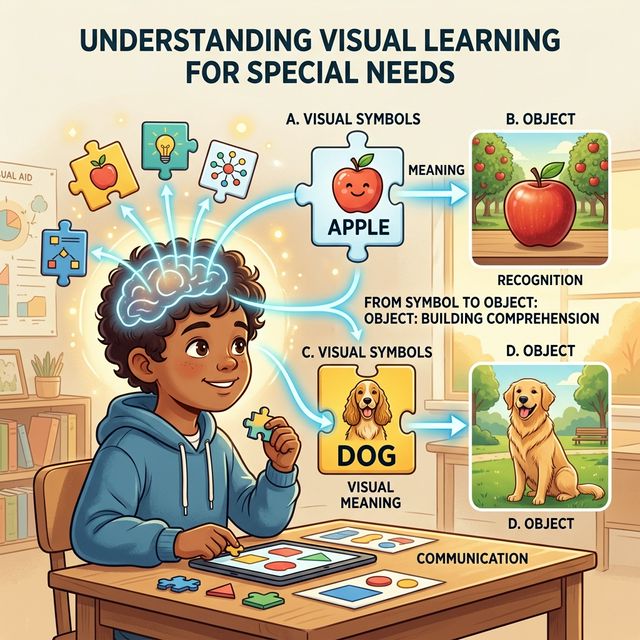
The Science Behind Visual Learning for Special Needs
Research-backed insights into why visual learning is so effective for children with autism, ADHD, and other special needs.
Listen to this Article
Visual learning isn't just a preference - it's a scientifically proven approach that works particularly well for children with special needs. Let's explore the research behind why visual learning is so effective.
Neurological Basis of Visual Learning
Children with autism and ADHD often have:
Research Findings:
A 2022 study published in the Journal of Autism and Developmental Disorders found that children with autism showed 40% better task completion when using visual schedules compared to verbal instructions alone.
Why Visual Learning Works:
- Reduces Cognitive Load: Visual information is processed more efficiently
- Improves Memory: Visual cues are easier to remember than verbal instructions
- Increases Predictability: Visual schedules reduce anxiety and uncertainty
- Supports Independence: Children can reference visual cues without adult prompting
- Enhances Communication: Visual aids bridge communication gaps
Sarya's Visual Learning Approach:
Success Metrics:
Our internal data shows that children using Sarya's visual learning approach show:
The science is clear: visual learning isn't just helpful for children with special needs - it's essential for their success and independence.
Archana Pandey
Sarya Team Member